


Imagine it’s 2:00 AM. You are fast asleep, the lights in your physical shop are off, and the doors are locked tight. But on the other side of the country—or perhaps the other side of the world—someone has just discovered your brand. They’ve browsed your collection, read three glowing reviews, and clicked “Buy Now.” By the time you wake up and pour your first cup of coffee, you’ve already made a sale.
In 2026, this isn’t just a “nice-to-have” scenario for big tech companies. It is the baseline reality for any business that wants to survive. The way we shop has fundamentally shifted. We don’t just “go shopping” anymore; we are shopping, all the time, right from the palms of our hands.
If you’re still sitting on the fence about launching an e-commerce website, or if you think your Instagram page is “enough,” this post is for you. Let’s dive into why an e-commerce platform is the single most important asset you can own this year.
What is an E-commerce Website, Really? (Hint: It’s Not Just a Menu)
A common mistake I see business owners make is thinking an e-commerce site is just a digital version of their product catalog. It’s much more than that.
Think of your e-commerce website as your Digital Headquarters. While a standard business website tells people who you are, an e-commerce site tells them how they can get what you offer. It’s a 24/7 salesperson, a customer service desk, and a high-speed checkout lane all rolled into one.
To be effective in 2026, your site needs to handle the “heavy lifting”:
- Dynamic Product Listings: High-res images and descriptions that do the talking for you.
- The “Magic” Shopping Cart: A seamless way for users to bundle items.
- Secure Payment Gateways: Building that crucial “trust bridge” so customers feel safe sharing their details.
- Automation: Handling orders and sending confirmation emails while you focus on the big picture.
The 24/7 Revenue Engine
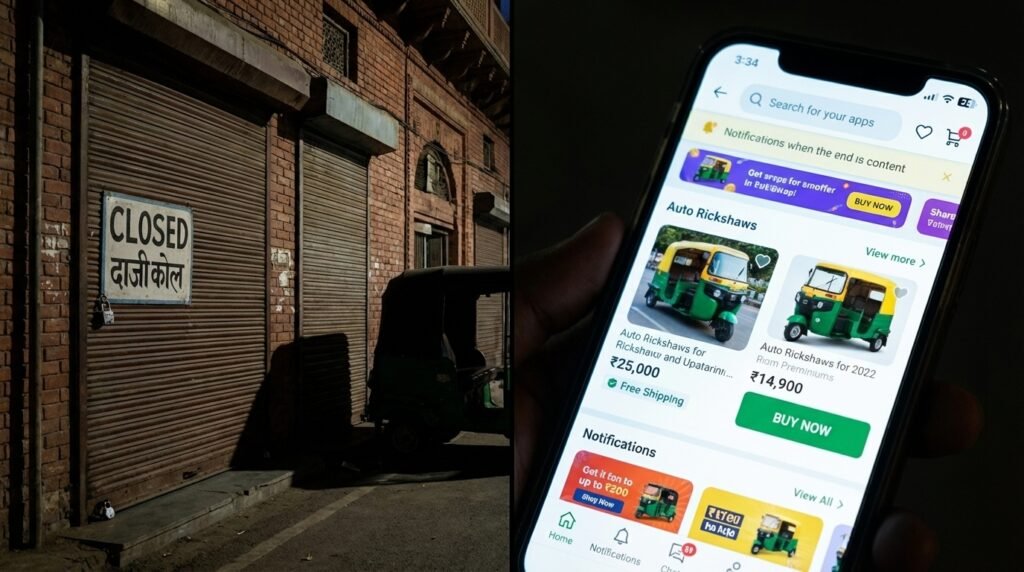
The most obvious benefit of an e-commerce website is that it never sleeps. A physical store is a prisoner of the clock. You have opening hours, lunch breaks, and holidays.
An e-commerce site ignores time zones. It allows a busy parent to shop for groceries at midnight or a professional to buy a new desk at 6:00 AM before their commute. By removing the “time” barrier, you are essentially doubling or tripling your potential sales window without increasing your overhead costs for staff or electricity.
Breaking the “Geographic Cage”
If you run a boutique in Kolkata or a furniture shop in Bengaluru, your primary customers are the people who live within a few kilometers of your front door. You are limited by foot traffic.
With an e-commerce website, your “local” market becomes the world. A small handmade jewelry brand in a rural village can suddenly ship products to New York or London. In 2026, your location is just where you keep your inventory—your market is wherever there is an internet connection.
Why “Social Media Only” is a Risky Strategy
I hear this a lot: “But I have 50,000 followers on Instagram! Why do I need a website?”
Here is the hard truth: You do not own your social media followers. You are “renting” space on someone else’s land. If the algorithm changes tomorrow (which it will), or if your account gets hacked or flagged, your entire business could vanish overnight.
An e-commerce website is “owned land.” You control the design, you own the customer data (like email addresses), and you dictate the shopping experience. Social media should be the bridge that leads people to your website, but the website is where the actual relationship—and the transaction—should live.
The “Non-Negotiable” Features for 2026
If you’re going to build a site, you have to do it right. A slow, clunky website will actually hurt your brand more than having no website at all. Here is what customers in 2026 expect:
1. Mobile-First, Not Just Mobile-Friendly
Most people aren’t sitting at desks to shop. They are on the bus, in waiting rooms, or on their lunch breaks. If your site doesn’t look perfect and load instantly on a smartphone, you’ve already lost the sale.
2. Trust Signals and Reviews
We don’t buy anything without checking the “stars” first. Integrating real customer reviews and secure checkout badges isn’t optional; it’s the only way to prove you’re a legitimate business in a sea of internet scams.
3. Blazing Fast Speed
The “three-second rule” is real. If your page takes longer than three seconds to load, the customer is going back to Google to find your competitor.
4. Smart Search and Filters
Don’t make your customers work to find what they want. If I’m looking for “Blue Velvet Sofa,” I shouldn’t have to scroll through 50 pages of wooden chairs to find it.
It’s Not Just for the “Big Guys” Anymore
There is a myth that e-commerce is too expensive for small businesses. Ten years ago, that might have been true. But today, tools like Shopify, WooCommerce, or custom-built solutions are more affordable and accessible than ever.
In fact, being small is an advantage. You can offer a personal touch, a unique story, and niche products that massive marketplaces like Amazon often overlook. An e-commerce site allows you to compete on a level playing field. When your website looks professional, a customer doesn’t care if you have two employees or two thousand—they only care about the value you provide.
Final Thoughts: The Digital Shift is Permanent
The world isn’t going back to “offline only.” The convenience of digital shopping has changed human psychology. We value our time more than ever, and a well-built e-commerce website respects that time.
Investing in a website in 2026 isn’t just about making more money this month; it’s about “future-proofing” your legacy. It’s about ensuring that as the world moves faster, your business has the wheels to keep up.
Is your business ready to go global? Or are you still waiting for the “perfect time” to launch? Let’s talk about it in the comments below!
Source: Link