

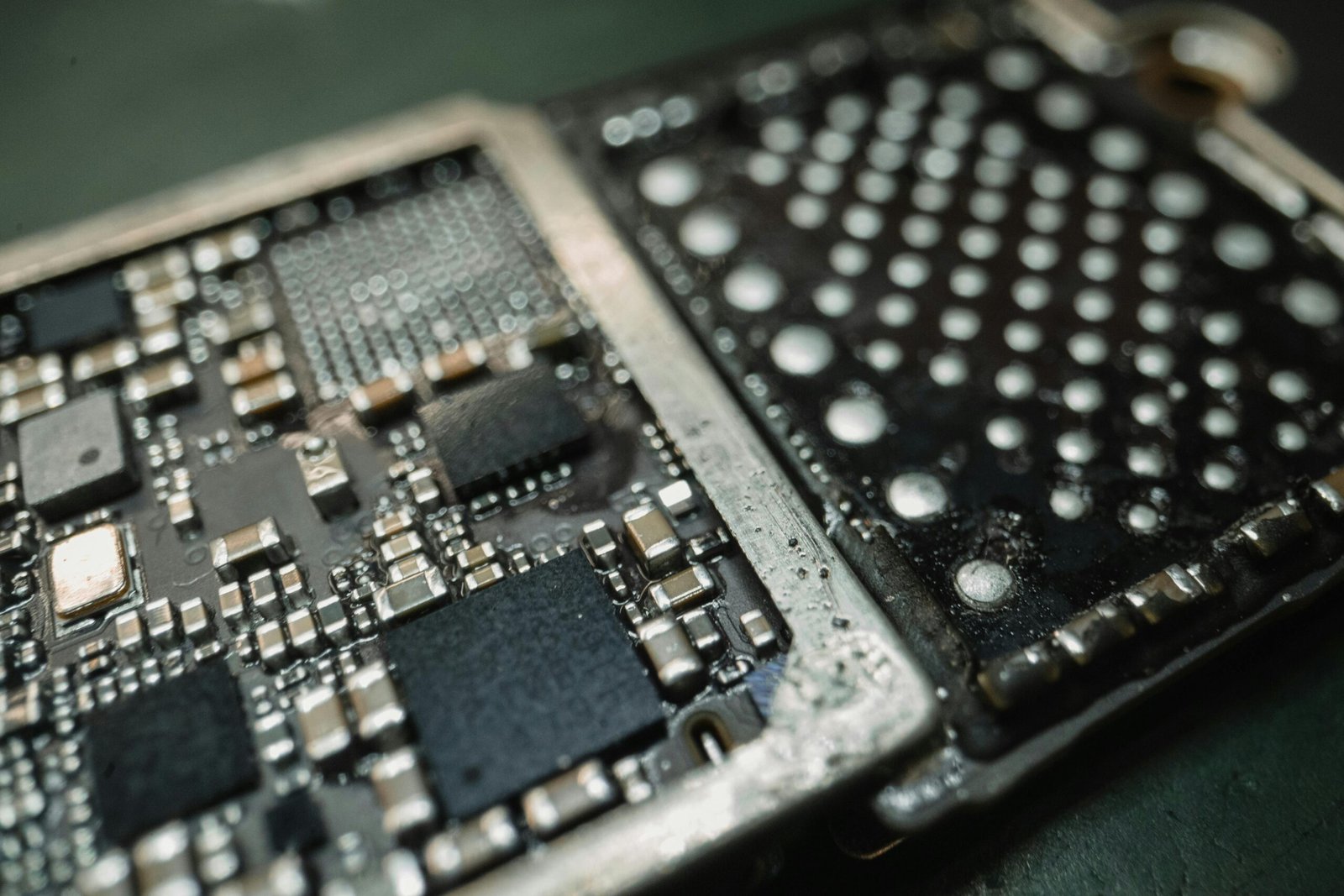
Semiconductors are one of the most critical inventions of the modern era, quietly powering nearly every digital experience we rely on today. From smartphones and laptops to medical equipment, electric vehicles, and communication infrastructure, semiconductors form the technological foundation of the connected world.
As digital transformation accelerates across industries, the importance of semiconductor technology continues to grow. These small but powerful components enable data processing, signal control, and intelligent automation, making them indispensable to modern life.
What Are Semiconductors and Why They Matter
A semiconductor is a material—most commonly silicon—that can partially conduct electricity under specific conditions. Unlike conductors, which allow electrical current to flow freely, or insulators, which block it entirely, semiconductors operate between these two extremes. This controllable behavior allows them to function as electrical switches and amplifiers.
Because semiconductors can both block and permit electrical flow, they are ideal for creating transistors and integrated circuits. These components form the core of computers, smartphones, sensors, and countless electronic systems. Without semiconductors, modern computing and communication technologies would not exist.
Early Scientific Discoveries That Shaped Semiconductor Technology
Foundations in 19th-Century Physics
The origins of semiconductor technology trace back to early scientific experiments in the nineteenth century. Researchers observed that certain materials responded to heat and electricity in unusual ways. These early discoveries revealed that electrical conductivity could vary based on temperature and material composition.
Experiments involving metal compounds and crystals demonstrated properties that did not align with traditional conductors or insulators. These findings laid the groundwork for future exploration into materials with controllable electrical behavior.
Advancements in Electrical Control and Signal Detection
By the late nineteenth and early twentieth centuries, scientists had discovered methods for directing electrical current and detecting radio signals using solid materials. These breakthroughs proved that electronic control could be achieved without relying solely on mechanical or thermal systems.
The development of vacuum tubes further advanced electronics by allowing signal amplification and current regulation. However, these devices were large, inefficient, and prone to failure, creating the need for a more reliable alternative.
The Transistor Revolution
The Invention That Changed Electronics Forever
The modern semiconductor era began with the invention of the transistor in 1947. Developed at Bell Laboratories, the transistor replaced vacuum tubes with a compact, energy-efficient device capable of switching and amplifying electrical signals.
This breakthrough marked a turning point in electronics. Transistors consumed less power, generated less heat, and were far more reliable than previous technologies. Their invention earned global recognition and reshaped the future of computing and communication.
Why the Transistor Was So Important
The transistor made it possible to miniaturize electronic devices. Radios, computers, and communication systems became smaller, faster, and more affordable. This innovation directly enabled the development of modern computers and set the stage for the digital revolution.
Why Silicon Changed Everything
From Germanium to Silicon
Early transistors were built using germanium, which performed well but presented limitations in durability and scalability. Silicon, although initially difficult to work with, offered superior long-term advantages.
Silicon’s abundance, thermal stability, and predictable electrical properties made it ideal for mass production. Advances in manufacturing techniques allowed engineers to precisely control impurities within silicon crystals, unlocking its full potential.
Advantages of Silicon-Based Semiconductors
Silicon quickly became the dominant semiconductor material due to its ability to:
- Operate at higher temperatures
- Withstand higher voltages
- Form stable oxide layers essential for circuit design
- Deliver consistent and reliable performance
These qualities enabled the creation of more complex and durable electronic components, accelerating industry-wide adoption.
Integrated Circuits and the Rise of Computing
The Birth of Integrated Circuits
The development of integrated circuits marked another major leap in semiconductor technology. Instead of assembling individual components separately, engineers combined transistors, resistors, and capacitors onto a single silicon chip.
This innovation dramatically reduced size, cost, and power consumption while increasing reliability. Integrated circuits quickly replaced vacuum tubes and discrete components in commercial electronics.
Moore’s Law and Rapid Innovation
As integrated circuits evolved, the number of transistors on a single chip increased rapidly. This trend became known as Moore’s Law, which observed that transistor density doubled approximately every two years while costs declined.
Although the pace has slowed, Moore’s Law continues to influence semiconductor research, investment, and technological expectations.
Microprocessors and the Digital Age
The Emergence of the Microprocessor
A microprocessor is a complete central processing unit built on a single semiconductor chip. It executes instructions, performs calculations, and manages data flow within electronic systems.
The introduction of commercial microprocessors in the 1970s transformed computing. Computers became more accessible, powerful, and practical for personal and professional use.
Impact on Global Technology
Microprocessors expanded the semiconductor market beyond traditional computing. They enabled the growth of software-driven systems, embedded electronics, and automation technologies, increasing global demand for advanced chips.
The Semiconductor Industry Today
Cloud Computing and Mobile Technology
The rise of cloud computing created demand for specialized processors capable of handling massive workloads efficiently. At the same time, mobile devices required energy-efficient chips that balanced performance with battery life.
Manufacturers responded by developing advanced architectures optimized for power efficiency, speed, and scalability.
Artificial Intelligence and Advanced Chip Design
Artificial intelligence represents the next major growth phase for the semiconductor industry. AI workloads require specialized hardware designed for parallel processing and large-scale data analysis.
As machine learning, automation, and data-driven decision-making expand across industries, demand for AI-focused semiconductors continues to surge.
Challenges Facing the Global Semiconductor Industry
Supply Chain and Geopolitical Risks
Semiconductor manufacturing relies on highly complex global supply chains, often concentrated in specific regions. This concentration makes production vulnerable to disruptions caused by geopolitical tensions, trade restrictions, and export controls.
Environmental and Sustainability Concerns
Chip fabrication requires significant energy, water, and chemical resources. As environmental regulations tighten and sustainability becomes a priority, manufacturers face increasing pressure to reduce their ecological footprint while maintaining production capacity.
The Future of Semiconductor Technology
Despite ongoing challenges, semiconductors remain central to technological progress. Innovations in artificial intelligence, renewable energy, communication networks, and automation will continue to depend on advanced semiconductor solutions.
As the digital economy expands, semiconductors will remain a driving force behind global innovation, economic growth, and the next generation of intelligent systems.
Ref: link