

Introduction
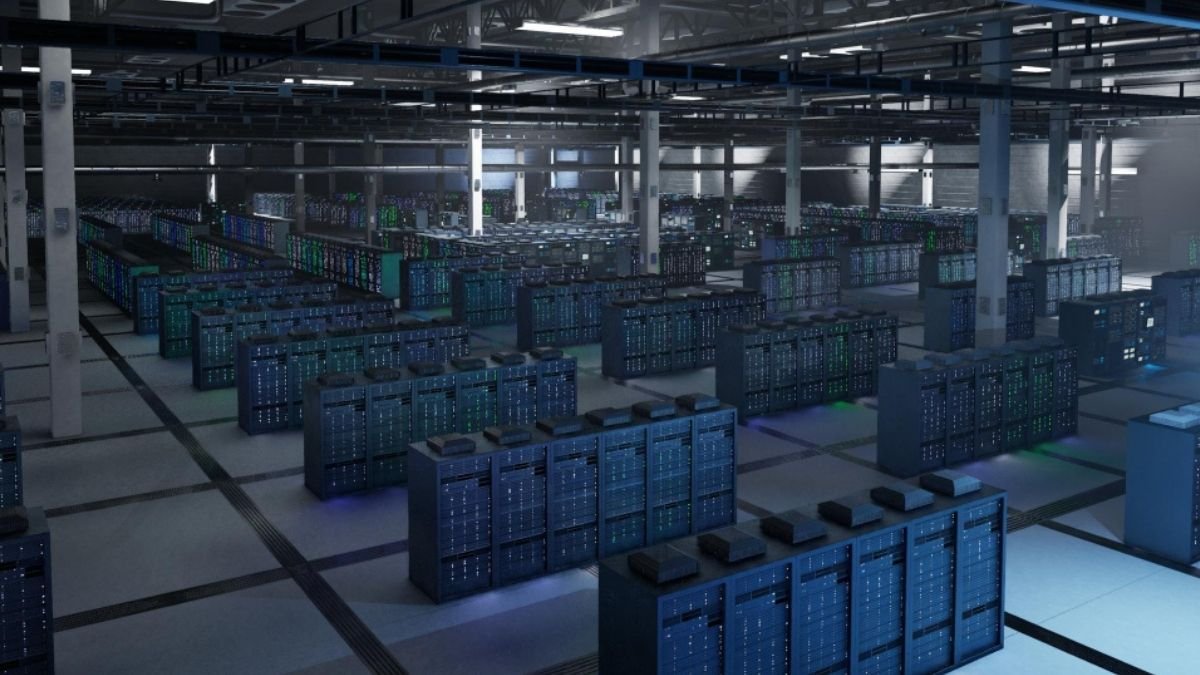
The tech industry has a dirty secret: data centers consume massive amounts of energy. Every email you send, video you stream, and search you perform requires power—and that power has an environmental cost.
Here’s the scale: by 2025, IT could account for 8% of global greenhouse gas emissions. Data centers alone consume about 1% of global electricity. That’s equivalent to powering entire countries.
But there’s good news. Tech giants and forward-thinking companies are transforming data centers into models of sustainability. Through green computing initiatives, renewable energy investments, and revolutionary cooling technologies, they’re proving that digital innovation and environmental responsibility can coexist.
By 2025, over 60% of enterprises consider sustainability a key factor in selecting cloud providers. Major companies like Microsoft aim to be carbon negative by 2030, Google is committed to running entirely on carbon-free energy by 2030, and Amazon pledged to achieve net-zero carbon by 2040.
This article explores green technology in data centers, sustainable computing practices, and how the tech industry is reducing its environmental footprint while growing capacity.
The Environmental Impact of Data Centers
Understanding the problem requires grasping data centers environmental impact:
Energy Consumption
Data centers house thousands of servers running 24/7. The Uptime Institute estimates data centers globally consume over 200 terawatt-hours annually—more than some countries’ total energy consumption.
This energy powers:
- Servers and storage: Running applications and storing data
- Networking equipment: Switches, routers, and firewalls connecting everything
- Cooling systems: Removing heat generated by equipment (often consuming 40% of total power)
- Supporting infrastructure: Lighting, security, fire suppression
Carbon Emissions
Most electricity still comes from fossil fuels. Data center energy consumption translates to significant carbon emissions—currently estimated at 2-3% of global emissions, similar to the aviation industry.
As cloud computing, AI, cryptocurrency, and streaming services grow, energy demands increase unless we change approaches.
Water Usage
Traditional cooling systems consume enormous amounts of water. A medium-sized data center can use millions of gallons annually—equivalent to water consumption of thousands of households.
In water-scarce regions, this raises serious concerns about resource allocation.
E-Waste
Servers and equipment have limited lifespans, typically 3-5 years. Disposing of old equipment creates electronic waste containing hazardous materials.
Globally, e-waste is growing faster than any other waste stream, with only about 20% currently recycled properly.
Resource Extraction
Manufacturing servers, chips, and equipment requires rare earth metals and other resources extracted through environmentally damaging mining operations.
What Is Green Computing?
Green computing encompasses strategies to reduce computing’s environmental impact throughout technology lifecycle:
Energy efficiency: Maximizing computational work per unit of energy consumed.
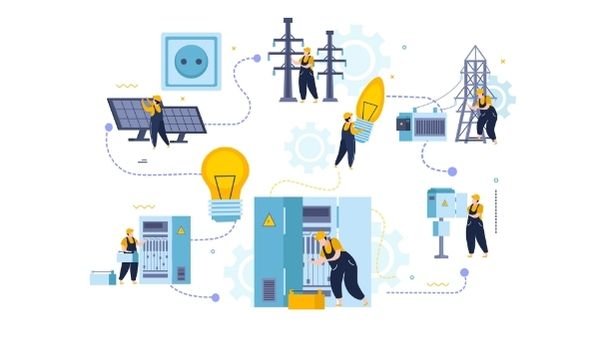
Renewable energy: Powering operations with solar, wind, hydro, and other clean energy sources.
Sustainable design: Creating hardware designed for longevity, repairability, and recyclability.
Resource optimization: Using resources efficiently to minimize waste.
Carbon reduction: Reducing or offsetting greenhouse gas emissions.
Circular economy: Keeping equipment and materials in use through reuse, refurbishment, and recycling.
Sustainable Data Center Technologies
Innovative technologies are transforming data centers into sustainable operations:
Advanced Cooling Systems
Cooling accounts for massive energy consumption. New approaches dramatically reduce this:
Free cooling: Using outside air when temperatures permit. When it’s cold outside, why use energy-intensive air conditioning? Simply bring in filtered outside air.
Data centers in cold climates can use free cooling much of the year, reducing cooling energy by 80% or more.
Liquid cooling: Circulating liquid directly to hot components is far more efficient than air cooling. Some systems submerge servers in non-conductive liquid for maximum heat transfer.
Google uses AI to optimize data center cooling in real-time, reducing energy for cooling by up to 40%.
Hot/cold aisle containment: Organizing servers to separate hot exhaust air from cool intake air prevents mixing, improving cooling efficiency.
Evaporative cooling: Uses water evaporation to cool air—much less energy than traditional air conditioning, though it requires water resources.
Geothermal cooling: Leveraging earth’s stable underground temperature for cooling—renewable and constant.
Energy-Efficient Hardware
Next-generation processors: Modern CPUs and GPUs deliver more computation per watt. ARM-based processors particularly excel at energy efficiency.
Solid-state drives (SSDs): Use less energy than traditional hard drives while offering better performance.
Power supply optimization: High-efficiency power supplies waste less energy as heat.
Low-power servers: Specialized servers designed for specific workloads optimize energy usage.
Hardware acceleration: GPUs, TPUs, and specialized AI chips perform certain calculations far more efficiently than general-purpose CPUs.
Renewable Energy Integration
Major tech companies are investing heavily in renewable energy:
On-site generation: Solar panels on roofs and nearby land provide clean power directly to data centers.
Power purchase agreements (PPAs): Long-term contracts to buy renewable energy from wind and solar farms, supporting renewable energy development.
Energy storage: Batteries store excess renewable energy for use when generation is low, enabling 24/7 renewable operation.
Microgrids: Self-contained power systems combining generation, storage, and smart management for maximum renewable utilization.
Microsoft has committed to 100% renewable energy by 2025. Google has been carbon-neutral since 2007 and matches 100% of electricity consumption with renewable energy purchases.
Intelligent Workload Management
Workload shifting: Moving computational tasks to data centers with available renewable energy or cool weather for free cooling.
Time shifting: Running non-urgent workloads when renewable energy is abundant or grid demand is low.
Geographic distribution: Placing data centers in locations with favorable climate, abundant renewables, or low grid carbon intensity.
Right-sizing: Matching server capacity to actual needs, eliminating idle servers consuming energy without doing useful work.
AI and machine learning optimize these decisions in real-time, continuously improving efficiency.
Modular and Prefabricated Design
Modular data centers: Self-contained units that can be deployed quickly and scaled incrementally, reducing overprovisioning.
Prefabrication: Building components in factories optimizes designs for efficiency and reduces waste compared to custom on-site construction.
Flexible capacity: Adding modules as needed rather than building excess capacity that sits underutilized.
Leading Green Data Center Initiatives
Let’s examine real-world examples:
Microsoft’s Sustainability Commitments
Carbon negative by 2030: Not just carbon-neutral—removing more carbon than emitted.
Water positive by 2030: Replenishing more water than consumed.
Zero waste by 2030: Eliminating landfill waste from operations and products.
Underwater data centers: Project Natick tested underwater data centers cooled naturally by ocean water, showing feasibility and efficiency benefits.
AI optimization: Uses AI to manage workloads dynamically, optimizing for lowest carbon intensity across global data centers.
Google’s Carbon-Free Energy Vision
24/7 carbon-free energy by 2030: Going beyond matching renewable purchases to actually running on carbon-free energy every hour of every day.
AI-powered cooling optimization: DeepMind AI reduced cooling energy by 40%, one of the largest efficiency gains in data center history.
Circular economy commitment: Maximizing reuse and recycling of data center equipment and materials.
Sustainable hardware design: Designing servers and equipment for longevity, repairability, and eventual recycling.
Amazon’s Climate Pledge
Net-zero carbon by 2040: Achieving net-zero across all operations a decade ahead of the Paris Agreement timeline.
100% renewable energy by 2025: Matching all electricity consumption with renewable energy.
Shipment Zero: Making half of all shipments net-zero carbon by 2030.
Climate Pledge Fund: $2 billion fund investing in companies developing sustainability technologies.
AWS has become the world’s largest corporate purchaser of renewable energy.
Facebook/Meta’s Sustainability
100% renewable energy: Data centers powered by renewables.
Water efficiency: Innovative cooling systems minimize water usage.
Sustainable facilities: LEED-certified green building designs.
Open source sustainability: Sharing data center designs and efficiency innovations with the industry through Open Compute Project.
Apple’s Comprehensive Approach
Carbon neutral by 2030: Across entire business, including manufacturing and product use.
100% renewable energy: All facilities worldwide powered by renewables since 2018.
Recycled materials: Increasing use of recycled and renewable materials in products.
Product longevity: Designing devices to last longer, reducing replacement frequency.
How Cloud Computing Helps the Environment
Moving to cloud from on-premises infrastructure often reduces environmental impact:
Improved Efficiency
Cloud providers achieve economies of scale impossible for individual organizations:
- Server utilization rates of 60-80% versus 15-25% for typical corporate data centers
- Advanced cooling and power distribution technologies
- Continuous optimization by specialized teams
- Latest generation, most efficient hardware
Shared Infrastructure
Multiple organizations share physical infrastructure, maximizing utilization and minimizing waste compared to everyone maintaining separate facilities.
Renewable Energy Access
Large cloud providers can invest in renewable energy projects inaccessible to smaller organizations, benefiting all customers.
Reduced E-Waste
Cloud providers extend equipment life through better maintenance, repurpose components, and recycle responsibly at scale.
Optimized Resource Allocation
Cloud elasticity means resources scale with demand. Organizations don’t need to maintain peak capacity year-round, reducing energy consumption.
The Green Electronics Council estimates helping save nearly 400 million megawatt-hours through 1.5 billion green products recommended so far.
Green Computing Best Practices
Organizations can implement green computing principles:
For Businesses
Choose sustainable cloud providers: Select providers committed to renewable energy and sustainability transparency.
Optimize workloads: Right-size instances, shut down unused resources, use autoscaling to match capacity to demand.
Energy-efficient design: Build applications that minimize computational and data transfer requirements.
Data lifecycle management: Delete obsolete data, compress stored data, use appropriate storage tiers.
Sustainable procurement: Consider environmental impact when purchasing technology.
Measure and optimize: Track carbon footprint of IT operations and set reduction goals.
For Developers
Efficient code: Write optimized code that runs efficiently, reducing computational requirements.
Green architecture: Design applications to minimize energy consumption.
Asynchronous processing: Use event-driven architectures that process work only when needed.
Caching: Reduce redundant computations and data transfers through intelligent caching.
Database optimization: Efficient queries and indexes reduce computational overhead.
Serverless where appropriate: Pay for actual compute time only, automatically scaling to zero when idle.
For Individuals
Reduce streaming quality: Lower resolution uses less data and energy—4K isn’t necessary on small screens.
Delete old emails and files: Stored data requires energy. Clean up unnecessary digital clutter.
Unsubscribe from unused services: Reduce data processing and storage requirements.
Extend device life: Use devices longer before replacing them.
Choose green providers: Support companies prioritizing sustainability.
Turn off notifications: Reduce constant server queries checking for updates.
Measuring Data Center Sustainability
Several metrics assess data center environmental performance:
Power Usage Effectiveness (PUE)
PUE = Total Facility Energy / IT Equipment Energy
Perfect efficiency is 1.0 (all energy goes to IT equipment). Traditional data centers average 2.0 or higher. Modern efficient data centers achieve 1.1-1.3.
Carbon Usage Effectiveness (CUE)
CUE = Total CO2 Emissions / IT Equipment Energy
Measures carbon efficiency, accounting for energy source cleanliness, not just efficiency.
Water Usage Effectiveness (WUE)
WUE = Annual Water Usage / IT Equipment Energy
Measures water consumption efficiency for cooling and operations.
Renewable Energy Percentage
Percentage of total energy from renewable sources—a direct measure of low-carbon operation.
Future of Green Data Centers
Green technology continues advancing:
Hydrogen Fuel Cells
Using hydrogen as backup power instead of diesel generators, producing only water as emissions.
Advanced Materials
New materials for construction, insulation, and components improve efficiency and reduce environmental impact.
AI Optimization
Increasingly sophisticated AI manages every aspect of data center operations for maximum efficiency.
Waste Heat Recovery
Capturing waste heat from data centers to heat buildings, greenhouses, or drive industrial processes.
Biodegradable Servers
Research into server components that can biodegrade safely at end-of-life.
Carbon-Negative Operations
Going beyond carbon-neutral to actually remove carbon from atmosphere through operations.
Conclusion
Green technology in data centers represents one of the most important sustainability challenges and opportunities of our time. As digital transformation accelerates and data demands grow exponentially, making computing sustainable isn’t optional—it’s essential.
The good news is that major progress is happening. Tech industry leaders are proving that high-performance computing and environmental responsibility can coexist. Through renewable energy, advanced cooling, efficient hardware, and intelligent optimization, data centers are becoming cleaner while growing capacity.
For businesses, choosing sustainable cloud providers and optimizing workloads reduces both environmental impact and costs. For individuals, small changes in digital habits collectively make significant differences.
The path to sustainable computing is clear: renewable energy, efficiency optimization, circular economy principles, and continuous innovation. Organizations embracing these principles lead not just in sustainability but often in performance and cost-efficiency too.
As we rely more on digital technologies, ensuring those technologies don’t harm our planet becomes critical. Green computing isn’t just good for the environment—it’s good business, driving innovation, reducing costs, and meeting stakeholder expectations.
The data centers of tomorrow will be carbon-neutral or carbon-negative, powered by renewables, cooled efficiently, and designed for circular economy principles. The future of computing is green, and that future is arriving faster than many expected.